

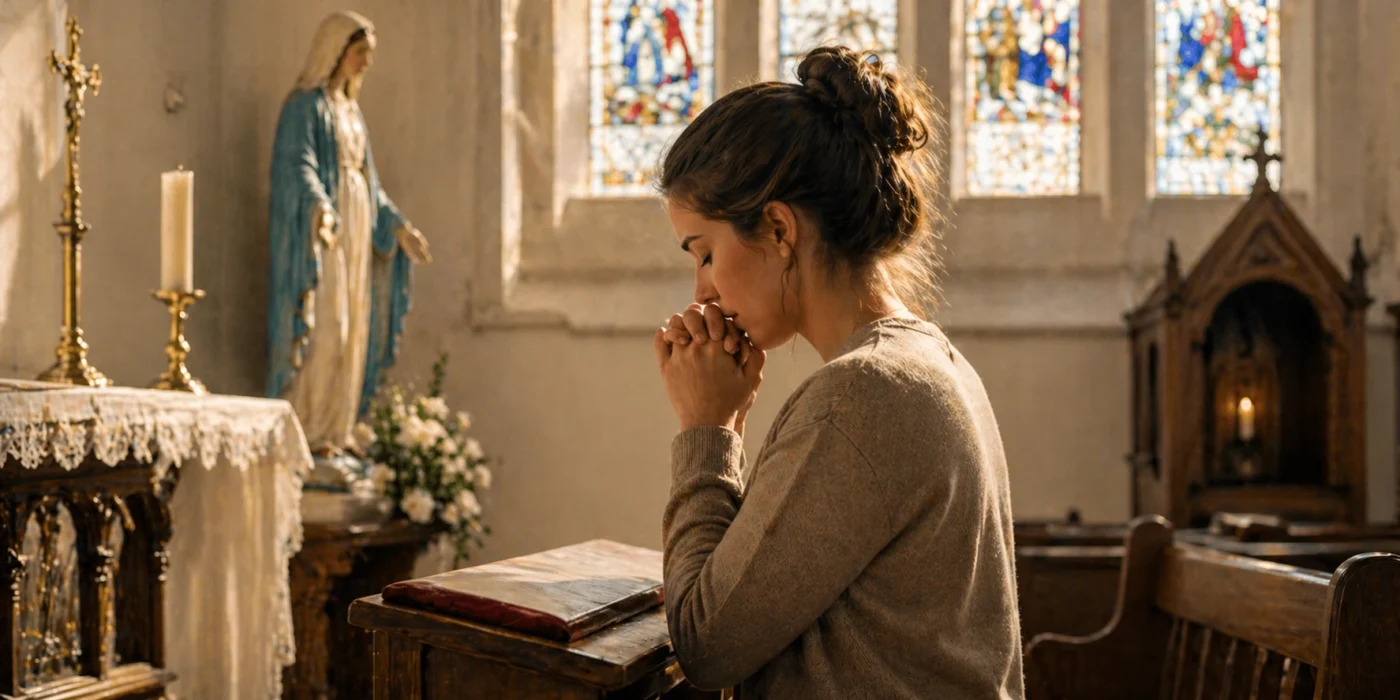
The short answer is yes, a non-virgin woman can become a nun. In Catholic religious life, the question is not simply about a woman’s past, but about her present call, her faith, her freedom, her maturity, and her desire to give herself completely to God. This topic often creates confusion because many people mix together three different ideas: being a nun, being a religious sister, and being a consecrated virgin. They are connected to the same spiritual universe, but they are not exactly the same vocation.
This article gives a clear, respectful and deeply explained answer. We will look at what the Church actually considers, what past sexual experience means in discernment, why virginity is not the same thing as vocation, and how chastity becomes a free spiritual commitment rather than a simple biological fact. 🌿
Can a Non-Virgin Woman Become a Nun? The Clear Answer ✅

Yes. A woman does not have to be physically virgin to enter a Catholic religious community and become a nun or religious sister. What matters is whether she is free to enter, properly formed, sincerely called, able to live the vows, and ready to embrace a life of prayer, service, obedience, poverty and consecrated chastity.
In simple words: the Church does not reduce a woman’s vocation to her sexual history. A woman who has had a past relationship, who has made mistakes, who has converted later in life, or who has lived a different life before discovering faith may still be called to religious life. A vocation is not a reward for having a perfect past; it is a response to a present call.
“Religious life is not about pretending one has no past. It is about giving one’s whole life, past included, to God.”
This is why many religious communities focus less on “Has she always lived perfectly?” and more on deeper questions: Is she emotionally mature? Is she free? Does she understand the vows? Can she live in community? Is her desire stable? Has she healed from wounds that could affect her vocation? These questions are more important than a simplistic yes-or-no judgment about virginity.
Why Do People Think a Nun Must Be a Virgin?
The confusion comes from language, symbolism and popular imagination. In Christian tradition, religious women are often described as “brides of Christ.” The image is beautiful and deeply spiritual, but many people interpret it too literally. They assume that if a woman is spiritually given to Christ, she must also have been physically untouched before entering religious life.
In reality, the spiritual meaning is much wider. A nun or religious sister gives her future, her heart, her body, her daily actions and her whole life to God. This gift is expressed through vows, especially the vow of chastity. But chastity in religious life is not simply about what happened before. It is about how the person chooses to live now and forever.
Another reason for confusion is the expression “consecrated virgin”. A consecrated virgin is a specific vocation in the Catholic Church, distinct from being a nun. Since the word “virgin” appears directly in that vocation, many people wrongly apply the same condition to every woman in religious life. That is where the misunderstanding begins.
Nun, Religious Sister and Consecrated Virgin: The Important Difference 🌸
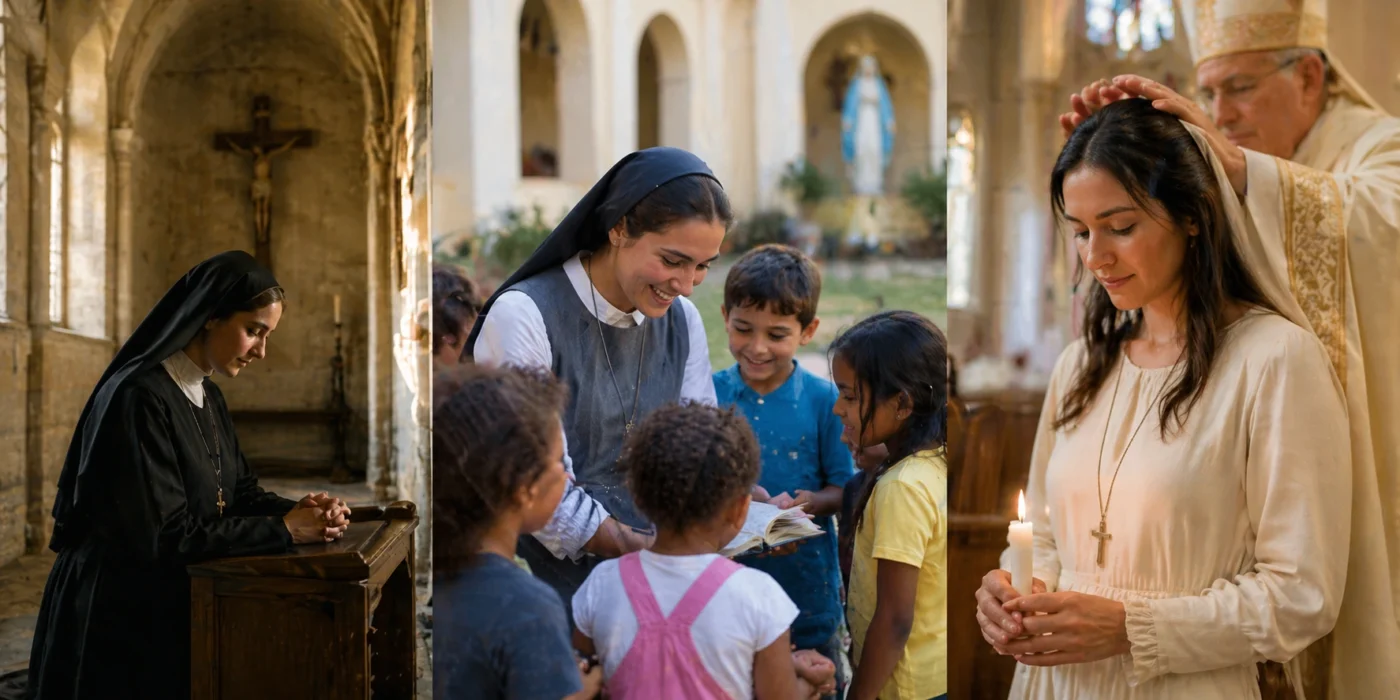
To answer the question properly, we must separate three vocations that are often mixed together. A nun usually lives a more contemplative, cloistered or monastic form of religious life. A religious sister often lives an apostolic form of religious life, serving in education, health care, charity, evangelization or community work. A consecrated virgin, however, is a woman consecrated by the bishop according to a specific rite, usually while living in the world.
A woman who is not physically virgin can still become a nun or religious sister if she meets the requirements of the community and the Church. The question becomes more specific when speaking about consecrated virginity, because that vocation has its own theological and canonical meaning. This is why it is important not to confuse every religious woman with a consecrated virgin.
What this means in real life
A woman who had a boyfriend in the past, who was previously sexually active, or who later returned seriously to the faith may be accepted into religious life. Her path would involve discernment, formation, spiritual direction and examination of her readiness. The community would not usually treat her past as an automatic barrier. Instead, they would look at the whole person.
However, if she specifically asks about the formal vocation of consecrated virginity, the answer can become more nuanced and depends on Church norms, interpretation and the judgment of ecclesial authority. For most people asking “Can I become a nun if I am not a virgin?”, the practical answer remains: yes, religious life can still be possible.
What Are the Real Requirements to Become a Nun?
Religious communities do not simply ask one question about virginity. They consider a much wider picture. A woman discerning religious life normally needs to be Catholic, unmarried, free from obligations that would prevent entry, psychologically and physically capable of community life, and sincerely drawn toward a life of prayer and service.
Many communities also consider age, education, debt, family responsibilities, health, personal maturity and the ability to live peacefully with others. These requirements exist not to exclude people harshly, but to protect the woman, the community and the vocation itself. Religious life is beautiful, but it is also demanding. It requires stability, humility and long-term commitment.
- Faith: she must sincerely desire to follow Christ in the Catholic Church.
- Freedom: she must be free to enter, not currently married and not bound by obligations that make entry impossible.
- Maturity: she must be able to live community life, obedience and emotional discipline.
- Health: she should have the physical and psychological capacity required by the community.
- Discernment: she must test the vocation over time, not act from impulse, guilt or escape.
- Chastity: she must be willing to live celibate chastity from now on.
This is also where the concept of chastity becomes important in a broader human sense. Chastity is not only a religious word; it can also refer to self-control, intentionality, modesty, discipline and the way a person integrates desire into a meaningful life. For readers exploring the symbolic or lifestyle meaning of chastity outside religious life, our guide to the Chastity Belt collection can help connect the idea of restraint, commitment and personal boundaries in a very different but semantically related context.
Does a Sexual Past Prevent a Religious Vocation?
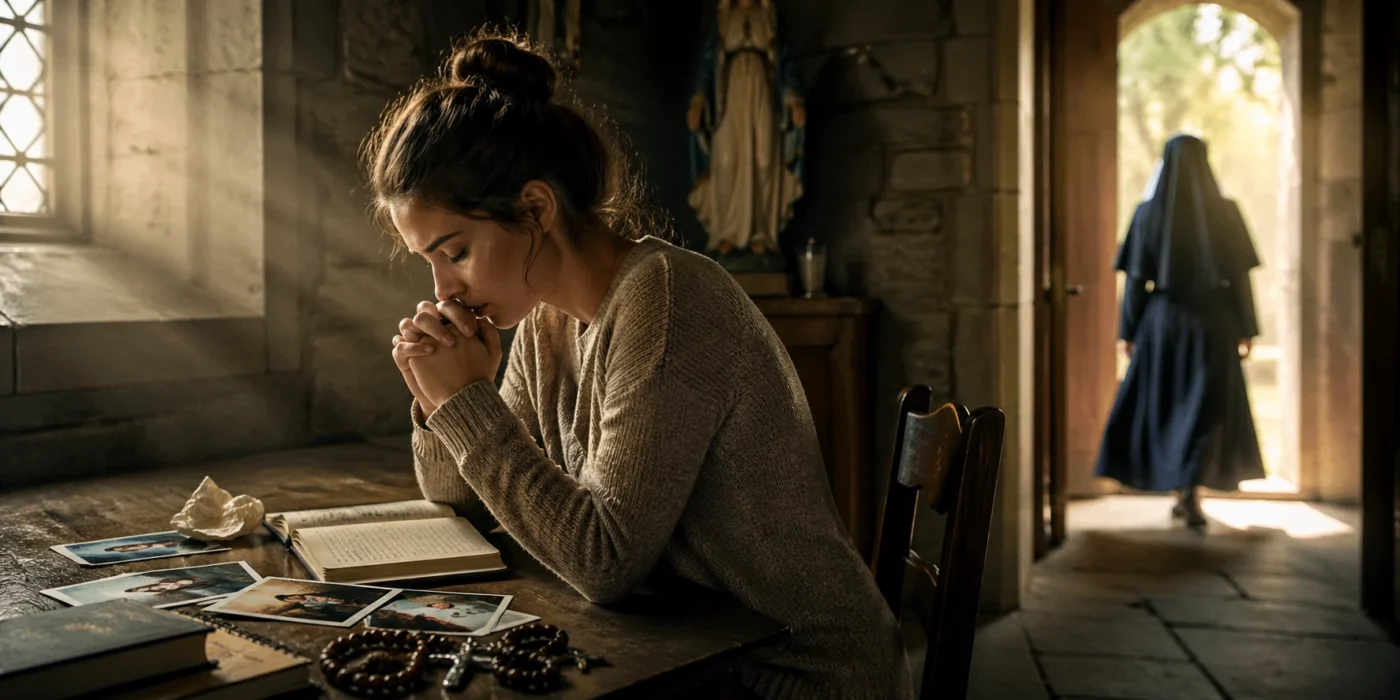
A sexual past does not automatically prevent a woman from becoming a nun. This is one of the most important points of the article. The Christian understanding of vocation is deeply connected to conversion, mercy and transformation. A person’s past may need to be understood, healed and integrated, but it does not necessarily close the door to holiness.
In fact, many saints had complicated pasts. Some were widows, some were converts, some lived worldly lives before a radical change. The Church has always recognized that grace can transform a person. A vocation is not based on having a spotless biography. It is based on God’s call and the person’s response.
When the past may need deeper discernment
That said, a religious community may explore a woman’s past if it affects her present freedom or emotional stability. For example, if she recently ended an intense relationship, if she is entering religious life to escape heartbreak, if she has unresolved trauma, or if she struggles with patterns that could make the vow of chastity difficult, the community may ask her to take more time before entering.
This is not rejection. It is wisdom. Religious life should not be used as a hiding place from pain. It should be a free and mature gift. A woman does not need to be perfect, but she does need to be honest. Healing and vocation can go together, but they must not be confused.
“The question is not: did she have a past? The question is: is she free, healed enough, and truly called now?”
The Real Meaning of Chastity in Religious Life 🔐
In religious life, chastity is not simply “not having sex.” It is a total orientation of love. A nun renounces marriage and sexual relationships not because the body is bad, but because she gives her whole availability to God and to the mission of her community. This is why the vow is spiritually powerful: it transforms desire into service, prayer and self-giving.
For a non-virgin woman, this can be especially meaningful. Her past does not erase her ability to make a future vow. The vow concerns the life she chooses to live from now on. It is a promise of fidelity, not a denial of history. When lived well, chastity becomes a form of interior freedom. It says: “My love is no longer scattered; it is gathered, purified and offered.”
This is also why the idea of chastity should never be reduced to shame. A mature Christian understanding of chastity is not about disgust for sexuality, but about rightly ordered love. For married people, chastity has one form. For single people, another. For religious women, another. The same word can apply differently depending on the vocation.
Chastity as discipline, not repression
Good chastity is not cold or lifeless. It is not emotional numbness. A nun is still a woman with affection, tenderness, personality, sensitivity and human warmth. The difference is that her love is not directed toward exclusive romantic possession. It becomes universal, disciplined and rooted in prayer.
This distinction matters because people often imagine nuns as people who “gave up love.” In reality, the goal is the opposite: religious life is meant to expand love. The nun gives up one form of love to become available for another form of love.
Comparison Table: Non-Virgin Woman, Nun, Sister and Consecrated Virgin
To make the topic easier to understand, here is a clear comparison. This kind of distinction is essential because many online answers are too short and create more confusion than clarity.
| Vocation / Situation | Is physical virginity required? | Main focus | Can a non-virgin woman be accepted? |
|---|---|---|---|
| Nun | No, not as a general requirement | Prayer, community, vows, often contemplative life | Yes, if she meets the community’s requirements |
| Religious Sister | No, not as a general requirement | Prayer, vows, apostolic service, mission | Yes, after discernment and formation |
| Consecrated Virgin | This vocation has a specific relationship to virginity | Consecration by the bishop, usually lived in the world | More nuanced; it depends on Church norms and authority |
| Widow entering religious life | No | New vocation after marriage | Yes, many communities may consider it |
| Formerly sexually active convert | No automatic barrier | Conversion, healing, mature discernment | Yes, if she is free and sincerely called |
How the Discernment Process Usually Works
Becoming a nun is not a sudden decision made after reading one article. It is a gradual process. A woman first feels an attraction to religious life. Then she prays, speaks with a priest or spiritual director, contacts communities, visits convents, and slowly discovers whether the desire is stable.
Most communities have several stages. The names and durations can vary, but the general movement is similar: initial contact, visits, candidacy or postulancy, novitiate, temporary vows, and eventually perpetual vows. This rhythm protects the woman from rushing and protects the community from accepting someone too quickly.
Why time is necessary
Time reveals the truth of desire. At the beginning, religious life can appear romantic, peaceful or mysterious. But daily life in a convent includes ordinary duties, personalities, obedience, fatigue, silence, service and repetition. The question is not only “Do I like the idea of being a nun?” but “Can I live this life when it becomes real, ordinary and demanding?”
A woman with a sexual past may also need time to see whether she is truly called to celibate life or whether she is reacting to disappointment, guilt, heartbreak or fear. This is why a good community will not shame her, but will help her discern honestly. Real vocation grows in truth, not pressure.
Practical Advice for a Non-Virgin Woman Who Feels Called to Become a Nun 🌿
If you are a woman wondering whether your past prevents you from becoming a nun, the first thing to know is this: do not disqualify yourself too quickly. Many people reject their own vocation before even speaking to someone qualified. Shame often speaks louder than truth. But discernment should happen with guidance, not fear.
Start by praying honestly. Not in a dramatic way, but simply: “God, if this desire is from You, help me understand it.” Then speak with a priest, a vocation director or a religious sister. You do not need to reveal every detail immediately to everyone, but you should be honest when the proper time comes in a trusted setting.
- Do not enter from guilt: religious life is not a punishment for a sexual past.
- Do not enter from heartbreak: wait until emotional wounds are clearer.
- Do not obsess over labels: focus first on prayer, peace and freedom.
- Do seek spiritual direction: a mature guide can help you separate fear from vocation.
- Do visit communities: real contact is better than endless online searching.
In the same way that religious chastity requires intentional commitment, secular discussions around chastity often involve symbols, discipline and personal boundaries. For readers exploring chastity from a relationship or lifestyle angle, our Female Chastity Belt collection connects with the broader theme of feminine chastity, restraint and symbolic control, while remaining clearly separate from the Catholic vocation discussed in this article.
Helpful Video: How to Become a Nun / Religious Sister 🎥
A video can make the discernment process easier to understand because religious life is not only a doctrine or a rule. It is a lived path. Watching real sisters explain the steps, the emotions and the formation process can help a reader stay longer on the page and understand the subject in a more human way.
Common Misconceptions About Non-Virgins Becoming Nuns
This topic is surrounded by myths. Some people think a convent only accepts women who have never dated, never kissed, never had a romantic life and never made serious mistakes. That image is unrealistic. Religious communities are not museums for perfect people. They are places of prayer, conversion, service and discipline.
Misconception 1: “A nun must have been pure her whole life”
This idea sounds religious, but it is not how vocation works. Christian purity is not only a past condition; it is also a present orientation of the heart. A woman who turns toward God with sincerity may grow into a deep form of purity, even if her past was complicated.
Misconception 2: “If she had a boyfriend, she cannot belong to God”
Having had a boyfriend does not automatically prevent a religious vocation. Many women discern marriage before discerning religious life. Sometimes a woman only understands her deeper vocation after experiencing ordinary romantic life. The key question is whether she is now free and genuinely drawn to religious consecration.
Misconception 3: “Religious life is for women who failed at relationships”
This is also false. Religious life is not a second-choice lifestyle for women who could not find a husband. It is a positive vocation. A woman should not enter because she “gave up” on love, but because she feels called to a different form of love.
Emotional and Spiritual Readiness: The Part People Forget
The most important question is often not “Is she a virgin?” but “Is she ready?” A woman may be physically virgin and still not ready for religious life. Another woman may not be physically virgin but may be spiritually mature, healed, stable and deeply called. This is why reducing vocation to one physical fact can be misleading.
Emotional readiness includes the ability to live without constant romantic validation, to accept correction, to forgive others, to work in community, to pray through dryness, and to remain faithful when the initial excitement fades. These qualities matter enormously.
Spiritual readiness also means understanding that becoming a nun is not an escape from the world, from sexuality, from men, from trauma or from responsibility. It is a movement toward God. If the movement is mostly “away from pain,” more healing may be needed. If it is deeply “toward God,” the vocation may be worth discerning.
Can a Woman With Children Become a Nun?
This question often appears beside the non-virgin question. A woman who has children may sometimes enter religious life later, especially if her children are grown and independent. However, she cannot abandon real responsibilities. Motherhood creates duties that must be respected.
If a woman is widowed or her children are adults, some communities may consider her vocation. If she has dependent children, entry would normally not be possible at that stage. Again, the issue is not shame; it is responsibility, freedom and justice.
Can a Divorced Woman Become a Nun?
A divorced woman’s situation depends on several factors. If she was validly married in the eyes of the Church, the question of annulment may arise. A woman cannot enter religious life if she is still bound by a marriage bond. If the Church declares that no valid sacramental marriage existed, then the situation may be different.
Because marriage law is complex, a divorced woman should not try to solve this alone through internet research. She should speak with a priest, diocesan vocation office or canon lawyer. The important point is that divorce itself does not mean a woman is hated by God or spiritually disqualified. But the Church must clarify her freedom before religious profession.
What Should a Woman Say to a Vocation Director?
Honesty matters, but timing matters too. A woman does not need to tell her entire life story in the first email. She can begin simply by saying that she feels drawn to religious life and would like to understand the discernment process. As trust grows, deeper questions can be discussed.
A simple first message could look like this:
“Hello Sister, I feel drawn to religious life and would like to learn more about your community and the discernment process. I am trying to understand whether this desire could be a true vocation, and I would be grateful for guidance.”
Later, when asked about personal history, she should answer truthfully. A healthy community does not need a theatrical confession, but it does need honesty. The purpose is not humiliation; it is discernment.
FAQ: Can a Non-Virgin Woman Become a Nun?
Can you become a nun if you are not a virgin?
Yes. A woman does not generally need to be physically virgin to become a nun or religious sister. She must be free, sincere, spiritually called and willing to live the vows, including celibate chastity.
Is being a nun the same as being a consecrated virgin?
No. A nun or religious sister belongs to a religious community and lives vows according to that community’s rule. A consecrated virgin is a distinct vocation with a specific rite and meaning in the Church.
Can a woman who had sex before conversion become a nun?
Yes, this can be possible. A past sexual life does not automatically block religious life. The community will consider her current faith, freedom, healing, maturity and ability to live chastity.
Can a widow become a nun?
Yes, a widow may sometimes enter religious life if she is free from obligations that would prevent it. Many women have entered religious life after marriage, especially once family responsibilities were complete.
Can a divorced woman become a nun?
It depends. The Church would need to clarify whether she is free from the marriage bond, often through an annulment process. She should speak with a priest or vocation director.
Can a woman with children become a nun?
Sometimes, but usually only if her children are adults and independent. A woman cannot abandon dependent children to enter religious life.
Does a nun take a vow of virginity?
Nuns and religious sisters take vows that include chastity, but this is not the same as saying every nun must have always been physically virgin. The vow concerns how she lives from the moment of commitment onward.
What if a woman feels ashamed of her past?
Shame should not be the guide. A woman should bring her past honestly into prayer, confession if Catholic, spiritual direction and healing. A vocation should grow from love and freedom, not self-hatred.
Can a non-Catholic woman become a nun?
To become a Catholic nun, she would need to become Catholic first and then discern religious life. This process takes time and should be guided by the Church.
What is the most important sign of a real vocation?
A real vocation usually brings a deep, stable attraction to God, a willingness to sacrifice, peace beneath the fear, and a desire to love and serve through the life of the community.
Conclusion: A Woman’s Past Does Not Automatically Close the Door
So, is it possible for a non-virgin woman to become a nun? Yes. In ordinary Catholic religious life, virginity is not a general requirement for becoming a nun or religious sister. What matters is her present freedom, sincerity, maturity, faith, healing and willingness to live the vows.
The deeper answer is even more beautiful: a vocation is not built on the illusion of a perfect past. It is built on a real call and a real response. A woman who has known love, mistakes, conversion, wounds or transformation may still be called to give her life entirely to God. The Church does not ask whether her story has always been simple. It asks whether she is now free to offer herself with truth.
Religious life is not about erasing history. It is about letting grace give history a new direction. 🌿
