

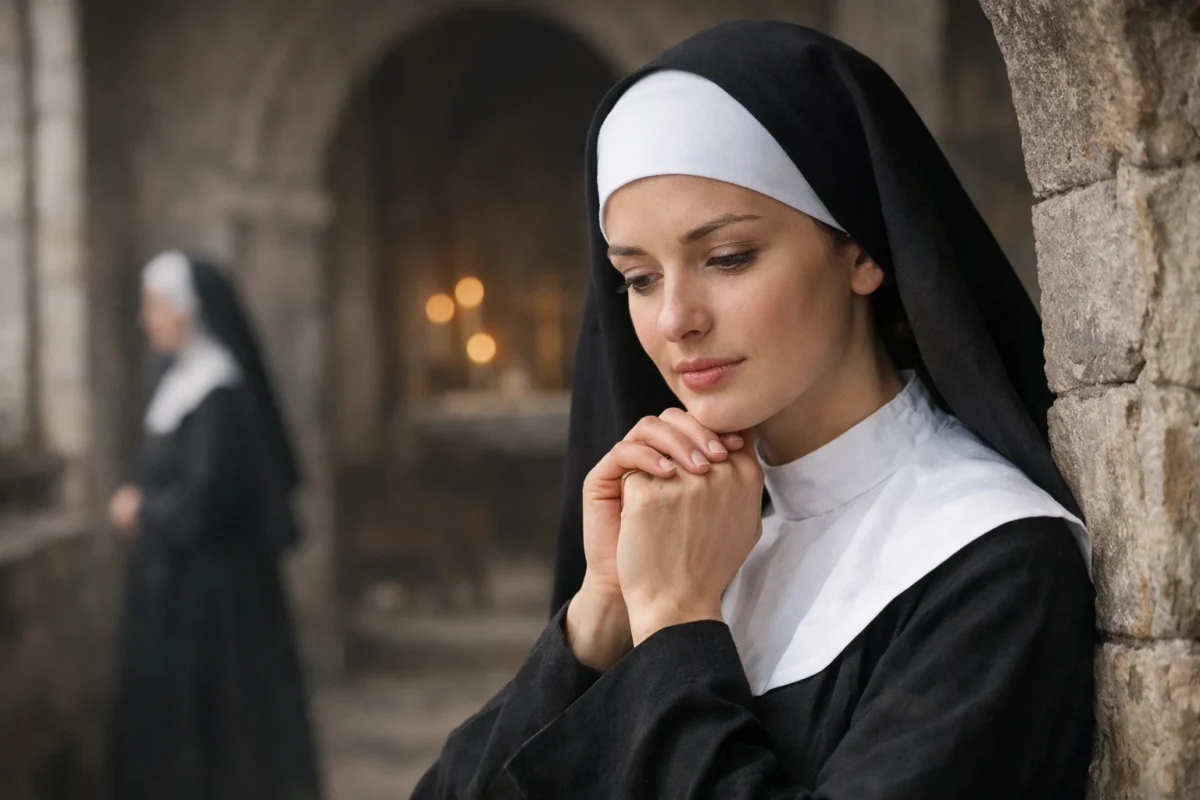
Many women ask this question quietly, sometimes with real hope, sometimes with fear, and sometimes with a heavy feeling that their past has already decided their future. 💭 The short answer is simple: yes, you may still be able to become a nun even if you are not a virgin. But the fuller answer deserves more than one sentence. It deserves context, nuance, and honesty.
In Catholic life, a vocation is not usually reduced to a single label from the past. What matters far more is who you are now, what God may be asking of you now, and whether you are genuinely able to live the life of prayer, celibacy, obedience, community, and perseverance that religious life requires. That is why this subject should never be answered with a cold yes-or-no alone.
In this guide, we will look at the real meaning of the question, the common confusion between a nun and a consecrated virgin, the practical issues a convent may examine, and the emotional side that many women carry in silence. We will also answer the questions people rarely ask out loud, even though they matter the most. ✨
The Short Answer: Yes, It May Still Be Possible

If you are asking, “Can I still be a nun if I’m not a virgin?”, the answer is often yes. In many Catholic religious communities, past sexual activity in itself does not automatically disqualify a woman from entering religious life. What communities are usually discerning is not whether your life was flawless, but whether you are ready, free, mature, and able to live the demands of this vocation from now on.
That distinction matters a lot. Religious life is not a reward for people with a perfectly untouched biography. It is a response to a call. A vocation is about the direction of your life, not merely the inventory of your past. If a woman has sincerely repented, grown, healed, and now desires to give herself fully to God, that can still be taken seriously.
This does not mean every community will handle every case in exactly the same way. Some communities are stricter than others. Some may look more closely at emotional history, previous relationships, children, debt, health, age, or psychological readiness. But the presence of a sexual past alone is not the same thing as the absence of a vocation.
Why So Many People Get Confused About This

A lot of the confusion comes from the way people use words. Many people hear phrases like “Bride of Christ”, “consecrated life”, or “virginity” and assume all forms of female religious life have the exact same entry requirements. They do not.
There is also a cultural tendency to imagine nuns as women who must have had a completely untouched past from the very beginning. That image may sound poetic, but it is too simplistic. Real vocations happen in the middle of real human lives. Many women discover a call after relationships, heartbreak, mistakes, confusion, trauma, healing, conversion, or major life changes.
In practice, vocation discernment tends to be more serious and more human than the internet version of it. Communities are usually asking deeper questions such as: Are you emotionally free? Can you live celibacy with peace? Are you drawn to prayer, service, and community life? Can you persevere when the life is no longer romantic but demanding? Those questions are far more important than a shallow stereotype.
Nun vs Consecrated Virgin: One of the Most Important Distinctions
If you want this article to save you time and confusion, remember this one point clearly: a nun and a consecrated virgin are not exactly the same vocation. That is where many people mix things up.
A nun or religious sister belongs to a religious community and lives under a specific form of vowed life, usually involving poverty, chastity, and obedience. Depending on the community, she may live in a cloister, a monastery, an apostolic congregation, or a more active form of service.
A consecrated virgin, by contrast, belongs to a distinct form of consecrated life. In that vocation, virginity itself carries a specific theological and symbolic importance. Because of that, someone can be eligible for religious life as a nun but not necessarily eligible for consecrated virginity in the strict canonical sense.
This is why women sometimes receive contradictory answers online. One person is talking about becoming a nun in a religious order; another is talking about consecrated virginity. Those are not interchangeable categories. If you do not separate them, the whole conversation becomes misleading very quickly.
What Convents Usually Look For Beyond Virginity
When a woman approaches a convent or a vocation director, the community is usually looking at a much broader picture. They are discerning whether she can actually live the vocation in a healthy and durable way. That involves more than a moral checkbox.
Here are some of the things communities often care about:
- Spiritual maturity: Is she serious about prayer, faith, and sacramental life?
- Emotional freedom: Is she still deeply tied to a past relationship or is she genuinely available for religious life?
- Capacity for celibacy: Can she live a peaceful, integrated celibate life rather than a merely repressed one?
- Psychological stability: Can she carry ordinary pressure, correction, silence, routine, and communal life?
- Honesty: Does she speak truthfully about her past, or does she hide things out of fear?
- Practical freedom: Debt, dependent children, legal obligations, unresolved addictions, or serious instability can matter a lot.
This broader perspective is actually encouraging. It means the Church is not normally trying to reduce a person to one fact. Instead, a community tries to discern whether a life-giving vocation can truly take root. In other words, the deeper question is not simply, “What happened before?” but “Who are you becoming now?” 🌿
Why Your Past Does Not Automatically End a Vocation
One of the strongest reasons women ask this question is shame. Not only moral shame, but also relational shame, body shame, spiritual shame, and the fear that they are somehow “less worthy” than someone who appears more untouched. That fear can become so loud that it starts answering the vocation question before God or a community ever does.
But a Christian vocation is not built on the fantasy that only the spotless are called. It is built on grace, conversion, and fidelity. A person can have a complicated past and still be called to holiness. A woman may have loved wrongly before learning how to love rightly. She may have searched in human attachment for what she later discovers in God. She may have made choices she regrets and still become someone deeply faithful.
In fact, many women are drawn to religious life precisely because life has taught them what does not satisfy. Their history can become a place of humility, compassion, and wisdom rather than a permanent disqualification. That does not romanticise mistakes. It simply refuses to make them the final word.
Sometimes the women who think they are “too late” are actually the ones asking the deepest questions with the most sincerity. And sincerity matters. Communities are not usually looking for a polished image; they are looking for truth, depth, and freedom.
Common Situations Women Quietly Worry About
“What if I had previous sexual relationships?”
This is the most common concern behind the main question. Previous sexual relationships do not always close the door to religious life. What matters more is whether the relationship is truly in the past, whether healing has happened, and whether you can now live celibacy with clarity and peace.
“What if I was once engaged or deeply in love?”
A woman who once wanted marriage is not automatically less suited to religious life. In some cases, that experience can even deepen her discernment. The key question is not whether she once desired human love, but whether she is now free to respond to a different call without secretly clinging to another life.
“What if I am not a virgin because of trauma or abuse?”
This is a deeply sensitive area, and it should never be approached with crude formulas. A woman is not morally defined by what was done to her. If this is part of your story, the discernment would normally need gentleness, psychological wisdom, and spiritual care. The issue is not blame, but healing and freedom.
“What if I have a child?”
This can change the situation practically because a child creates enduring responsibilities. In many cases, the question becomes less about virginity and more about justice, duty, and freedom. A woman cannot simply walk away from maternal obligations. That does not mean God stops calling, but it may mean the form of life must be discerned very carefully.
“What if I was married before?”
Here the issue becomes canonical and practical as well as spiritual. Previous marriage can involve sacramental, legal, and relational realities that must be resolved. Again, the central point is that the Church usually looks at the whole picture, not just one label.
Spiritual Chastity vs Modern Uses of the Word “Chastity”
One reason this topic gets strange online is that the word chastity now appears in very different worlds. In a religious context, chastity refers to ordered love, self-gift, and integrity according to one’s state of life. In modern online culture, the same word may be used in entirely different personal, symbolic, or erotic contexts.
If you are exploring the broader meaning of the term beyond theology, you can also browse our Chastity Belt collection, where the word is used in a modern product context rather than a convent setting. This distinction matters because many readers arrive on pages like this one after searching the same word with very different intentions.
The same applies to male-focused searches around modern restraint terminology. For readers trying to understand how the language shifts between spirituality, symbolism, and contemporary lifestyle vocabulary, our Male Chastity Cage collection provides another example of how the term is used outside religious life. Used carefully, these distinctions can actually improve understanding instead of creating more confusion.
From an SEO and reader perspective, this is useful because it acknowledges reality: one keyword can carry multiple meanings. From a human perspective, it is even more useful because it helps a reader realise that a Google result about chastity is not always speaking about the same thing.
Helpful Video: A Clear Catholic Answer 🎥
Sometimes a short video helps clarify the subject faster than a hundred comments on forums. The video below addresses the question directly and can help you hear the distinction in a more conversational way.
A good practice after watching is to ask yourself: am I looking for a technical rule, or am I really trying to discern a calling? Those are not the same question. The first can often be answered in a paragraph. The second may take prayer, accompaniment, and time.
Quick Comparison Table
| Question | General Answer | Why It Matters |
|---|---|---|
| Can a non-virgin become a nun or sister? | Often yes | Past sexual history does not automatically cancel a vocation. |
| Can a non-virgin become a consecrated virgin? | Usually no | This is a distinct vocation where virginity is central. |
| Will every convent judge the case identically? | No | Communities vary in discipline, culture, and admissions process. |
| What matters most in discernment? | Present freedom and ability to live celibacy | The focus is whether the vocation can be lived faithfully now. |
A Thought Worth Keeping 📖
Your past may explain part of your story, but it does not automatically define your vocation.
That sentence is worth sitting with for a minute. Many discerners do not need more information first; they need permission to stop speaking to themselves as if mercy applies to everyone except them. A vocation does not grow well in an atmosphere of self-contempt. It grows in truth.
FAQ: Can I Still Be a Nun If I’m Not a Virgin?
Do you have to be a virgin to become a nun?
Not necessarily. In many cases, you do not have to be a virgin to become a nun. Religious communities usually examine your present disposition, your spiritual life, your maturity, and your ability to live celibacy rather than reducing everything to your past alone.
Is a nun the same as a consecrated virgin?
No. This is one of the biggest misconceptions. A nun or religious sister belongs to a community with vows and a defined way of life. A consecrated virgin belongs to a distinct vocation with its own requirements. Mixing these two paths creates a lot of confusion online.
Can a woman with a sexual past still have a real vocation?
Yes, she can. A sexual past is not automatically proof that a vocation is impossible. The more serious question is whether she is now truly free, healed enough, and ready to live celibate love with integrity and peace.
Will a convent ask about my past relationships?
Quite possibly, yes. But the goal is not usually humiliation. A healthy community wants to understand whether your previous attachments are resolved and whether you can live community life and consecrated chastity faithfully.
Can I become a nun if I was previously married?
Potentially, but this can involve additional practical and canonical questions. The existence of a previous marriage does not fit into the same category as simply asking whether you were a virgin. These cases normally require more personal discernment and guidance.
What matters more than virginity when discerning religious life?
The deeper issues are usually faith, freedom, healing, honesty, emotional stability, prayer, and the real capacity to live celibacy. Those are the qualities that tend to matter most over time.
What should I do if I feel called but ashamed of my past?
Start by telling the truth to God without dramatizing or hiding. Then speak with a trustworthy priest, spiritual director, or vocation director. Shame often tells women to disqualify themselves before the Church ever has a chance to discern anything. That is not always wisdom; sometimes it is simply fear wearing a religious mask.
Final Answer: Yes, but the Real Question Is Deeper
So, can you still be a nun if you are not a virgin? In many cases, yes. But if you stop there, you miss the richer truth. The more meaningful question is whether you are now called, free, and ready to live the vocation of religious life as it truly is, not as a romantic image, and not as a punishment for your past, but as a full gift of self.
A convent is not usually searching for a woman with a perfectly edited story. It is searching, much more seriously, for a woman who can live faithfully, honestly, and joyfully in the life to which God may be calling her. That is why despair is often less accurate than hope.
If this question is personal for you, take it seriously, but do not answer it alone in the darkest version of your own mind. Pray, seek guidance, and let your discernment become concrete. Sometimes the door you thought was closed was only one you had closed against yourself. 🤍
