


Whether you are considering your first few hours in a chastity device or thinking about gradually progressing towards longer periods, one question should always come before excitement, discipline or endurance: how long is it safe to stay in chastity?
There is no universal number of hours or days that is automatically safe for every wearer. One person may feel comfortable for an afternoon, while another may need to remove the device after thirty minutes because of pressure, pinching or an unsuitable fit. Experienced wearers sometimes remain locked for considerably longer periods, but experience alone does not eliminate the need for regular hygiene, circulation checks, skin inspection and immediate access to the key.
The safest approach is not to treat chastity as an endurance competition. Instead, regard it as a gradual process in which your body provides continuous feedback. Comfort can improve as you learn which dimensions, materials and daily routines suit you, but pain, numbness and discolouration should never be interpreted as signs that you simply need to become tougher. 🔐
Important: This article provides general safety information and is not a substitute for medical advice. Remove the device immediately if you experience significant pain, numbness, loss of sensation, pronounced swelling, unusual colour changes, difficulty urinating or an injury. Seek urgent medical assistance if symptoms do not resolve promptly after removal.
How Long Can You Safely Wear a Chastity Cage?

A beginner should start with short, supervised sessions rather than attempting overnight or multi-day wear immediately. An initial session might last twenty to sixty minutes, followed by complete removal and a careful skin inspection. If there is no persistent redness, pinching, swelling, broken skin or difficulty urinating, the next session can be extended gradually.
After several successful short sessions, some users progress to a few hours during normal daily activities. Only once the device has proven comfortable while walking, sitting, using the toilet and experiencing spontaneous arousal should overnight wear even be considered. Moving directly from an initial fitting to several uninterrupted days makes it much easier to overlook an incorrect ring size, a rough edge or a pressure point that becomes increasingly serious over time.
“The safest duration is not the longest period you can tolerate. It is the longest period during which circulation, sensation, skin condition, urination and hygiene remain completely normal.”
Even an experienced wearer should not assume that a previously comfortable duration will always remain safe. Heat, exercise, dehydration, body-weight changes, skin sensitivity and minor changes in positioning can all affect how a device feels. Your normal limit may therefore change from one day to another.
Suggested Chastity Wear Progression by Experience Level
The following table is a conservative progression framework rather than a medical guarantee. A wearer should only move to the next stage when the previous stage has been completed repeatedly without adverse symptoms.
| Experience level | Suggested trial period | Main objective | Removal and inspection |
|---|---|---|---|
| First fitting | 20–60 minutes | Check ring pressure, cage length, urination and basic comfort | Remove immediately after the trial and inspect the entire area |
| Early beginner | 1–3 hours | Test sitting, walking and ordinary household activity | Remove after every session and check for persistent marks |
| Developing experience | Several daytime hours | Assess comfort during a normal routine | Perform regular visual and sensation checks |
| First overnight trial | One night only | Evaluate reactions to spontaneous nocturnal erections | Keep the key accessible and inspect immediately in the morning |
| Experienced use | Individual and progressive | Maintain comfort, hygiene and healthy skin rather than chasing a record | Schedule regular removal, cleaning and complete inspection |
These ranges deliberately avoid presenting a fixed maximum. There is limited clinical research establishing a medically approved duration for recreational chastity-device wear, and the variation between devices and individual anatomy is substantial. A poorly fitted cage may become unsafe within minutes, whereas a correctly fitted device may remain comfortable for much longer. Duration cannot compensate for poor sizing.
What Determines How Long It Is Safe to Stay in Chastity?
The number of hours spent locked is only one part of the safety equation. A better assessment considers several factors together: the fit of the base ring, the length and internal diameter of the cage, the material, ventilation, cleanliness, activity level, skin condition and the wearer’s ability to remove the device quickly.
Your level of experience
A first-time wearer is still learning how normal pressure differs from harmful compression. Small discomforts that seem insignificant during the first ten minutes may become pronounced after several hours. Beginners should therefore use shorter sessions with more frequent removal. Experience should be built through observation rather than through forcing the body to endure discomfort.
Your individual anatomy
Two people using the same device can have completely different experiences. The position of the testicles, the amount of loose skin, flaccid length, natural changes in size and sensitivity around the base ring all influence comfort. This is why choosing a cage solely from photographs or another person’s measurements can lead to a poor result.
Your daily activities
A cage that feels comfortable while standing may pinch when sitting in a car, bending forward or climbing stairs. Exercise introduces additional movement, heat, perspiration and friction. Before considering extended wear, test the device during the ordinary actions that form part of your real routine.
Temperature and natural swelling
The scrotum naturally contracts and relaxes in response to temperature. Hot weather, a warm bath or prolonged physical activity may change how tightly a base ring sits. Cold temperatures can have the opposite effect. A fit that appears ideal in one environment may therefore feel different later in the day.
Access to an emergency key
A wearable device should always be removable in an emergency. When a keyholder is involved, an emergency key should still be available to the wearer in a sealed envelope, numbered container or another agreed system. Psychological control should never depend upon making physical escape impossible during a genuine safety problem.
Correct Fit Matters More Than the Length of the Lock-Up
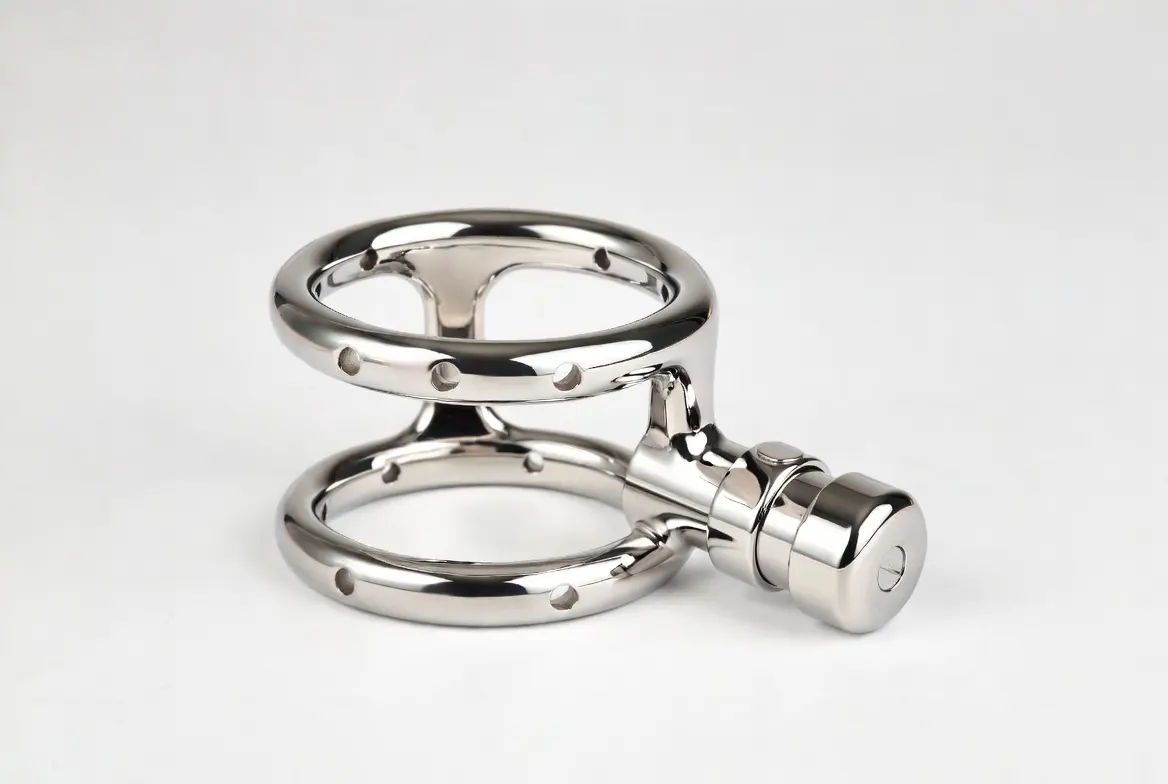
A well-fitted chastity cage should feel secure without continuously squeezing, cutting, burning or trapping skin. The base ring should not allow the device to fall away, but it must also leave enough room for normal circulation. Persistent deep indentations, intense pressure and loss of sensation are not desirable evidence of security.
The cage itself should generally accommodate the penis in its relaxed state without forcing it into an aggressively compressed or unnatural position. Some contact with the end of the cage may occur, but constant pressure against one concentrated point can produce irritation. The edges, ventilation openings and lock housing should also be smooth and free from burrs or sharp moulding seams.
Signs that the base ring may be too tight
- Persistent pain rather than mild awareness of the ring
- Numbness, tingling or reduced sensation
- Cold skin or a noticeable change in colour
- Pronounced swelling below or around the ring
- Difficulty positioning the testicles comfortably
- Marks that remain deep or painful after removal
Signs that the base ring may be too loose
- One or both testicles repeatedly slipping through
- The device rotating or moving excessively
- Skin being pulled and pinched by repeated movement
- The cage hanging in an unstable position
- A false sense of security that encourages overtightening elsewhere
Finding the correct device often requires more than choosing a nominal small, medium or large size. When comparing a broad range of shapes and materials, the male chastity cage collection can help you identify the structural differences between open designs, enclosed cages, compact models and devices made for different experience levels.
Chastity Cage Materials Compared for Extended Wear
No material is automatically the safest choice for every person. The quality of manufacture, exact design and suitability for your anatomy matter as much as whether the cage is made from silicone, plastic or metal. Nevertheless, each material has practical characteristics that can affect prolonged use.
| Material | Potential advantages | Possible limitations | Best considered for |
|---|---|---|---|
| Silicone | Soft feel, lightweight construction and less rigid contact | Can retain moisture, may move more and can be harder to clean thoroughly in enclosed designs | Short trials and wearers prioritising flexibility |
| Plastic or resin | Lightweight, available in many shapes and often suitable for discreet wear | Seams, enclosed areas and narrow openings can collect moisture or residue | Beginners who want a lighter rigid cage |
| Stainless steel | Rigid, durable and often highly ventilated in open-bar designs | Heavier, less forgiving and potentially uncomfortable when incorrectly sized | Experienced wearers who already understand their measurements |
An open design can make rinsing, drying and visual inspection easier, but it does not remove the need for periodic removal. An enclosed cage may feel smoother beneath clothing, yet trapped moisture and incomplete cleaning can become more significant during prolonged wear. Whichever material you select, inspect the product carefully before use and do not wear a cage with cracks, rough edges, corrosion, damaged locks or difficult-to-clean internal surfaces.
Hygiene Rules for Staying in Chastity Safely
Hygiene becomes increasingly important as the duration of wear increases. Sweat, urine droplets, dead skin and natural secretions can accumulate around the cage and beneath the foreskin. A device that appears clean from the outside may still contain moisture or residue around the ring, lock and enclosed sections.
Wash the accessible genital area gently with warm water each day. Avoid aggressively scrubbing delicate skin, and be cautious with heavily fragranced shower gels, disinfectants and perfumed products, which can cause dryness or irritation. NHS sexual-health guidance generally recommends gentle washing with warm water and warns that soaps or fragranced products may irritate genital skin.
If the cage is designed to permit washing while worn, rinse every accessible opening carefully and allow the area to dry completely. However, rinsing through the openings is not always equivalent to removing the device. Regular removal remains the most reliable way to inspect hidden skin, clean the cage thoroughly and ensure that no irritation is developing.
A practical cleaning routine
- Wash your hands before touching the device or genital area.
- Remove the cage in accordance with your agreed schedule.
- Inspect the penis, scrotum, underside of the base ring and all skin folds.
- Wash gently with warm water and an appropriate mild, fragrance-free product if needed.
- Rinse the device according to its material and the manufacturer’s care instructions.
- Dry both the skin and the cage completely before reapplication.
- Do not relock over irritated, broken, swollen or painful skin.
For a more detailed routine, read our guide to chastity and hygiene, which explains why regular cleaning is essential regardless of the planned lock-up duration.
💡 Practical tip: Keep a simple daily record during your first extended trials. Note the duration, activity level, cleaning time and any pressure points. Patterns that are difficult to remember become much easier to identify when written down.
Video: Understanding Chastity Cage Safety and Fit
A visual explanation can make it easier to understand how fit, material, body awareness and warning signs work together. The following educational video discusses the physical sensations associated with male chastity and emphasises the importance of removing a device when pain, numbness, coldness or unusual colour changes occur.
Videos provide general education only. Your own physical symptoms and professional medical advice should always take priority over another wearer’s experience.
Is It Safe to Sleep in a Chastity Cage?
Sleeping in a chastity cage creates a different challenge from daytime wear because spontaneous erections commonly occur during sleep. A cage that feels comfortable during the afternoon may pull strongly against the base ring at night. The wearer may also fail to notice gradual pressure, trapped skin or an uncomfortable sleeping position until awakened by pain.
Do not make your first experience an overnight session. Complete several shorter daytime trials first, including time spent lying down. When you eventually attempt one night, keep the emergency key within immediate reach and avoid combining the trial with alcohol, sedatives or anything else that could reduce your ability to recognise and respond to a problem.
Some pressure during a nocturnal erection may be expected because the device is designed to restrict expansion. However, sharp pain, intense pulling, numbness, coldness or pronounced discolouration are reasons to remove it. Repeatedly waking in significant discomfort is evidence that the device, size or overnight routine needs to be reconsidered.
Warning Signs: When Should a Chastity Cage Be Removed?
One of the most important skills in chastity is knowing the difference between psychological frustration and a genuine physical warning sign. A feeling of restriction may be part of the intended experience. Symptoms associated with compromised circulation, nerve pressure, injury or infection are not.
Remove the device immediately if you notice:
- Numbness or loss of sensation
- Blue, purple, very dark, unusually pale or cold skin
- Severe or rapidly increasing swelling
- Sharp, burning or escalating pain
- Bleeding, broken skin, blisters or open sores
- Skin trapped in the lock, hinge or cage opening
- Inability to urinate or a significantly obstructed urine stream
- Blood in the urine
- Discharge, unpleasant odour, fever or signs of infection
- A foreskin trapped behind the glans and unable to return to its normal position
Do not simply loosen the device and continue wearing it if a serious symptom has occurred. Remove it completely, inspect the area and allow the skin to recover. Persistent pain, swelling, numbness, urinary symptoms or colour changes require medical assessment. A foreskin trapped behind the glans with swelling and discolouration can represent paraphimosis, which is a medical emergency because blood flow may be affected.
Can You Stay in Chastity for Weeks or Months?
Reports of week-long, month-long or even longer lock-ups are common within chastity communities, but personal stories are not proof that uninterrupted wear is medically safe for everyone. There is no widely accepted clinical schedule guaranteeing that a particular number of days in a recreational chastity device is harmless.
Long-term chastity should be understood as an ongoing routine of controlled wear, cleaning, inspection and communication rather than as a device that is locked once and ignored indefinitely. Even when the psychological arrangement describes the wearer as permanently chaste, physical safety may still require temporary release for hygiene, skin recovery, medical appointments, travel or equipment maintenance.
Factors that make longer wear more demanding
- Repeated friction in the same area
- Moisture retained beneath the device
- Small fitting errors becoming more significant over time
- Difficulty inspecting concealed areas of skin
- Accumulation of urine or natural secretions
- Changes in body size, temperature and activity
- Complacency caused by previous problem-free sessions
A responsible long-term plan therefore includes predetermined release intervals, clear emergency rules and honest communication. The objective is not to prove that the cage never comes off. The objective is to preserve the experience without sacrificing skin integrity, circulation, urinary function or general health.
Can You Exercise While Wearing a Chastity Cage?

Light walking may be comfortable once a suitable fit has been established, but strenuous exercise introduces movement, pressure, heat and perspiration. Running, cycling, rowing, deep squats and contact sports can place additional stress on the base ring and surrounding tissue. Cycling is particularly demanding because the device may be compressed between the body and saddle.
Test each activity separately and for a short duration. A cage that performs well during office work should not automatically be considered suitable for a gym session. Stop immediately if movement causes repeated pinching, impact, pulling or numbness. Shower, clean the device and dry the area thoroughly after exercise rather than allowing sweat to remain trapped.
How Often Should You Take a Break from Chastity?
There is no universal break schedule, but periodic removal serves several important purposes. It allows complete washing, close inspection in good lighting, assessment of persistent marks and confirmation that normal sensation and colour return after the device is removed.
Beginners should remove the device after every trial session. More experienced wearers should still schedule routine release rather than waiting until a problem appears. If the skin is irritated, sore or unusually sensitive, remain unlocked until it has completely recovered. Reapplying the device too soon can transform minor friction into broken skin or a more persistent inflammatory problem.
Removing a cage for safety does not represent failure. It demonstrates the self-control required to practise chastity responsibly.
The Keyholder’s Role in Safe Chastity
A keyholder can contribute to anticipation, discipline and consensual power exchange, but control must be accompanied by responsibility. The wearer should be able to report pain, numbness, anxiety or hygiene concerns without fearing punishment for communicating honestly.
A responsible keyholder should:
- Agree on clear limits before the device is locked
- Understand the wearer’s level of experience
- Encourage gradual progression rather than sudden endurance challenges
- Permit immediate removal when a physical warning sign appears
- Know where the emergency key is stored
- Schedule hygiene and inspection releases
- Never ignore medical symptoms for the sake of maintaining a fantasy
Consent is continuous. A lock-up duration agreed in advance can be shortened whenever safety, wellbeing or consent changes. The dynamic may involve surrender, but it should never remove the wearer’s right to protect their body.
Daily Chastity Safety Checklist
Use this checklist during any period of extended wear. It takes less than a minute but can identify developing problems before they become more serious.
- ✅ Is the skin a normal colour and temperature?
- ✅ Is sensation normal on both sides of the ring and cage?
- ✅ Can you urinate normally without pain or significant obstruction?
- ✅ Is there any pinched or trapped skin?
- ✅ Are there new pressure points, sores or abrasions?
- ✅ Is the area clean, dry and free from unusual odour or discharge?
- ✅ Is the lock functioning correctly?
- ✅ Can the emergency key be accessed immediately?
- ✅ Do you still freely consent to continuing the session?
If the answer to any safety-related question is no, remove the cage and resolve the issue before continuing.
Frequently Asked Questions About Safe Chastity Duration
How long should a beginner wear a chastity cage?
A beginner should begin with a brief trial of approximately twenty to sixty minutes while awake and able to monitor the device. After removal, inspect the skin for pain, persistent redness, swelling or pressure marks. Sessions can be extended gradually only when the device remains comfortable and urination, sensation and circulation are normal.
Can I wear a chastity cage for 24 hours?
A full day should not be your first trial. Before attempting twenty-four hours, complete several shorter sessions and assess the device while walking, sitting, washing, urinating and lying down. Keep an emergency key available, maintain hygiene and remove the cage immediately if warning signs develop.
Is it safe to wear a chastity cage for a week?
Some experienced users report week-long wear, but there is no guarantee that seven days is safe for a particular person or device. Longer periods increase the importance of correct sizing, thorough cleaning, scheduled removal and complete skin inspections. A week-long goal should never take priority over pain, circulation, urinary function or skin health.
Can a chastity cage cut off circulation?
An excessively tight ring, swelling or incorrectly positioned device can interfere with normal circulation. Numbness, cold skin, marked swelling or blue, purple, dark or unusually pale colouration are warning signs. Remove the cage immediately and seek medical assistance if normal colour, warmth or sensation does not return promptly.
Are marks from a chastity ring normal?
A temporary light impression can occur where a ring rests against the skin, much like the mark left by close-fitting clothing. Deep grooves, bruising, broken skin, pain or marks that remain pronounced after removal indicate excessive pressure or friction and should not be ignored.
Should a chastity cage hurt during an erection?
A cage may create pressure and restriction as an erection begins, but severe, sharp or escalating pain is not a desirable or safe fitting test. Repeated painful nocturnal erections often indicate that the cage length, ring size, gap or overall design should be reassessed.
How often should a chastity cage be cleaned?
The accessible genital area should be cleaned daily, and the device should be rinsed and dried according to its material. Regular complete removal is still necessary for thorough cleaning and skin inspection. More frequent cleaning may be required after exercise, hot weather or heavy perspiration.
Can I use moisturiser or lubricant under a chastity cage?
A small amount of a suitable fragrance-free product may reduce friction for some wearers, but excessive product can trap moisture, collect residue and make the device unstable. Avoid applying products to broken or inflamed skin without professional advice, and ensure that the product is compatible with the cage material.
What should I do if the key is lost?
Do not wait for symptoms to develop. Use the predetermined emergency-release plan. Depending on the lock and device, this may require a spare key or professional assistance. Avoid placing cutting equipment directly against the skin without adequate protection. Seek emergency help if the device is causing pain, swelling, discolouration or impaired urination and cannot be removed safely.
Is permanent chastity physically possible?
“Permanent chastity” is usually better understood as a continuing relationship or lifestyle agreement rather than literally never removing the device. Hygiene, medical care, equipment inspection and skin recovery may all require temporary release. A safe long-term arrangement separates psychological continuity from uninterrupted physical wear.
Conclusion: Let Your Body Set the Limit
So, how long is it safe to stay in chastity? There is no single maximum that applies to every wearer. A first session should be brief, deliberate and followed by complete inspection. Longer periods should be reached gradually, only after the device has remained comfortable during ordinary movement, urination, cleaning and rest.
Correct sizing, clean and smooth materials, daily hygiene, scheduled removal and access to an emergency key are more important than achieving an impressive number of locked hours. Pain, numbness, coldness, discolouration, major swelling, urinary difficulty and broken skin are not challenges to overcome; they are instructions to stop.
Chastity should create anticipation, trust and controlled frustration, not preventable injury. Progress patiently, communicate honestly and remember that safe chastity is measured by the quality of the experience, not simply by the duration of the lock-up. 🔐
Health Information Sources
- Devon Sexual Health NHS: guidance on gentle genital hygiene and avoiding fragranced products.
- NHS: information about balanitis, genital washing and signs that require medical advice.
- Cleveland Clinic: information about penile disorders and urgent symptoms associated with restricted circulation.
- Healthdirect Australia: guidance on penile redness, discomfort, swelling and urinary symptoms.
