

When you start looking for a chastity cage, the number of options can feel overwhelming. Stainless steel, titanium, polycarbonate, resin, soft silicone: each material promises comfort, security or discretion, and product descriptions rarely explain what those differences actually mean once the device is being worn for hours at a time.
Yet the material you choose has a real impact on your experience. It affects how heavy the device feels, how it reacts to body temperature, how easy it is to keep clean, how secure it is, whether it will set off a metal detector and even how your skin responds to it over time. A material that is perfect for one person can be the wrong choice for someone else.
The good news is that there is no single “best” material for everyone. There is, however, a best material for your situation, depending on your experience, how long you plan to wear the device, your skin sensitivity and your lifestyle.
In this chastity cage material guide, we compare metal, plastic and silicone chastity cages in detail. You will learn the advantages and drawbacks of each material, which one is most comfortable, which suits beginners or long-term wear, how each one should be cleaned, and which common mistakes to avoid before you buy.
Key rule: material matters, but fit matters even more. A well-fitting cage in any material will always be safer and more comfortable than a poorly fitting cage made from the “perfect” material.
Quick Answer: Which Chastity Cage Material Should You Choose?
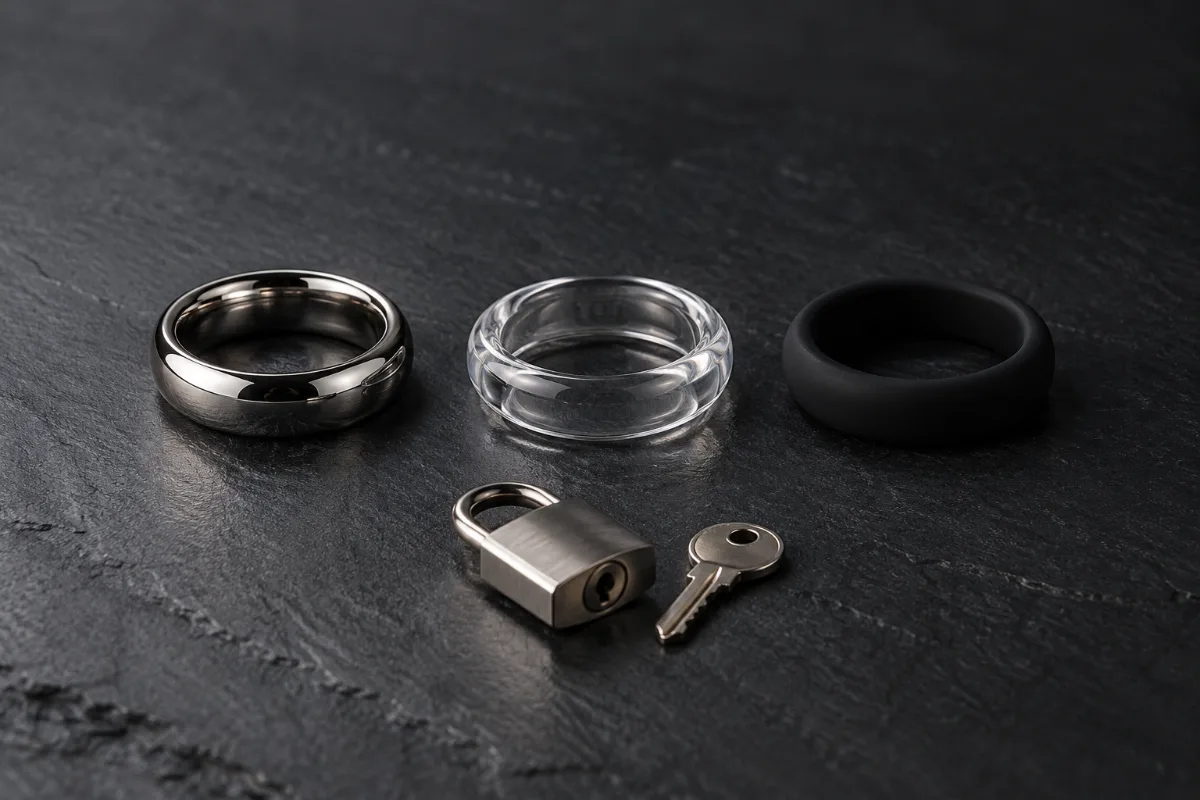
If you only need a quick overview, the table below summarises how the three main materials compare. Each option is explained in more detail further down.
| Material | Weight | Comfort | Security | Hygiene | Best for |
|---|---|---|---|---|---|
| Metal (stainless steel, titanium) | Heavy (titanium lighter) | Good once warmed to body temperature | Very high | Excellent, non-porous | Experienced wearers, security, durability |
| Plastic / resin | Very light | Good, especially for longer wear | Medium to high | Good if kept free of scratches | Beginners, longer wear, discretion |
| Silicone | Light and flexible | Very soft and forgiving | Lower | Good with medical-grade silicone | First-time users, comfort, sleeping |
In short: choose metal if security and durability are your priorities, plastic if you want a lightweight and discreet option for longer periods, and silicone if comfort and a gentle introduction to chastity matter most to you.
Why Does the Material of a Chastity Cage Matter?
A chastity device is worn directly against some of the most sensitive skin on the body, often for many hours. That makes the choice of material far more important than it would be for most accessories.
First, the material determines the weight of the device. A heavier cage pulls downwards and is felt more with every movement, while a lighter cage is easier to forget during daily activities. Second, materials react differently to temperature: metal feels cold when first put on and then takes on body heat, while plastic and silicone remain closer to skin temperature.
Third, the material affects hygiene. Smooth, non-porous surfaces are easier to clean thoroughly, while scratched or porous surfaces can trap moisture and bacteria. Fourth, it influences security and durability: some materials are almost impossible to damage, while others are more flexible or can crack if dropped.
Finally, material choice can matter for skin sensitivity and practical situations such as travelling. Someone with a nickel allergy or someone who needs to pass through airport security regularly will have very different priorities from someone who mainly wears a device at home.
Metal Chastity Cages: Durable, Secure and Easy to Clean
Metal chastity cages are often seen as the classic option. They are robust, have a premium feel and offer the highest level of security. You will find a wide range of styles in our metal chastity cage collection, from compact designs to more open, ventilated models.
Stainless steel
Stainless steel is the most common material for metal chastity devices. High-quality models are typically made from surgical or medical-grade stainless steel, which is corrosion-resistant, non-porous and easy to keep clean. It is also very durable: a well-made stainless steel cage can last for many years without losing its shape.
Titanium
Titanium offers many of the advantages of stainless steel but is significantly lighter. It is also considered very skin-friendly and is often chosen by people with metal sensitivities. The main drawback is price, as titanium devices are usually more expensive to produce.
Advantages of metal chastity cages
- Very high security and durability
- Smooth, non-porous surface that is easy to clean and disinfect
- Retains its shape perfectly over time
- Premium look and feel
Disadvantages of metal chastity cages
- Heavier than plastic or silicone, especially stainless steel models
- Feels cold when first put on
- Will usually trigger metal detectors at airports and other security checks
- Low-quality, plated alloys may cause reactions in people with a nickel allergy
Who should choose a metal chastity cage?
Metal is a good choice for people who already have some experience with chastity, who value security and durability, and who mainly wear their device at home or in situations without security checks. If weight is a concern, a titanium model offers a lighter alternative.
Plastic and Resin Chastity Cages: Lightweight and Discreet
Plastic chastity cages are usually made from materials such as polycarbonate, ABS or resin. Modern models are often surprisingly robust while weighing only a fraction of a metal device. Our plastic chastity cage range includes transparent, coloured and more discreet designs.
Polycarbonate, ABS and resin
Polycarbonate is impact-resistant and often used for transparent cages. ABS is a sturdy, affordable plastic, while resin devices are frequently produced with precise moulding or 3D printing, allowing for very smooth and ergonomic shapes. Whatever the material, look for a smooth finish without sharp seams or rough edges.
Advantages of plastic chastity cages
- Very lightweight, which makes them comfortable for longer periods
- Stays close to body temperature
- More discreet under clothing
- Generally more affordable than metal
- Often a better option for travelling, especially when combined with a plastic lock
Disadvantages of plastic chastity cages
- Less durable than metal and can crack if dropped or overtightened
- Scratches can form over time and trap bacteria if not cleaned carefully
- Usually cannot be boiled or exposed to high heat
- Offers a slightly lower level of security than metal
Who should choose a plastic chastity cage?
Plastic is an excellent all-round option for beginners, for people who want to wear a device for longer periods, and for anyone who values a lightweight, discreet feel. It is also a sensible choice if you are not yet sure which shape or size suits you best, as it is usually more affordable.
Silicone Chastity Cages: Soft, Flexible and Beginner-Friendly
Silicone chastity cages are the softest option. They are flexible, comfortable against the skin and particularly forgiving if your fit is not yet perfect. You can browse different shapes in our silicone chastity cage selection.
Why medical-grade silicone matters
Not all silicone is equal. Medical-grade or platinum-cured silicone is non-porous, body-safe and easier to keep hygienic. Cheaper silicone blends may contain fillers, can become porous over time and may retain odours. If you choose silicone, always check that the material is clearly described as body-safe.
Advantages of silicone chastity cages
- Very soft and flexible, offering a high level of comfort
- Lightweight and quiet when moving
- Ideal for first-time users and for getting used to the feeling of chastity
- Often more comfortable during sleep
Disadvantages of silicone chastity cages
- Lower security, as the flexible material is easier to remove
- Less durable than metal and can tear if stretched excessively
- Should never be used with silicone-based lubricants, which can damage the material
- Lint and dust can cling to the surface
Who should choose a silicone chastity cage?
Silicone is ideal if comfort is your top priority, if you are new to chastity, or if you want a gentle device for shorter periods or overnight wear. It is less suited to people who place a high value on security.
Metal vs Plastic vs Silicone: Side-by-Side Comparison
The table below compares the three materials across the criteria that matter most in everyday use.
| Criterion | Metal | Plastic / resin | Silicone |
|---|---|---|---|
| Weight | Heavy (titanium lighter) | Very light | Light |
| Comfort over several hours | Good with a correct fit | Very good | Very good |
| Security | Very high | Medium to high | Low to medium |
| Durability | Excellent | Good | Medium |
| Cleaning | Very easy, can often be boiled | Easy, avoid high heat | Easy, avoid silicone lubricants |
| Airport security | Usually detected | More discreet with a plastic lock | More discreet with a plastic lock |
| Skin sensitivity | Choose surgical steel or titanium | Generally well tolerated | Generally well tolerated if medical-grade |
| Price | Medium to high | Low to medium | Low to medium |
Which Chastity Cage Material Is the Most Comfortable?
For most people, silicone feels the most comfortable at first because it is soft and flexible. Plastic is a close second and often wins for longer periods, as it is very light while still holding its shape. Metal can also be very comfortable, but its weight is more noticeable, especially with larger stainless steel models.
That said, comfort depends far more on fit than on material. A base ring that is too tight, a cage that is too short or a gap that is too large will cause discomfort whatever the device is made of. Before choosing a material, it is worth taking careful measurements and checking the sizing information for each model.
What Is the Best Material for Long-Term Wear?
If you plan to wear a chastity device for longer periods, lightweight materials are usually the most practical. Plastic and resin cages are particularly popular for extended wear because they are light, stay close to body temperature and are less noticeable during daily activities. Titanium is an excellent metal alternative for people who prefer the security of metal without the weight of stainless steel.

Whatever material you choose, long-term wear always requires a gradual approach, a good fit and strict hygiene. Build up wearing time slowly, check your skin regularly and keep an emergency key accessible at all times.
Safety first: remove the device immediately if you notice pain, numbness, tingling, unusual swelling, skin discolouration or broken skin, and seek medical advice if symptoms do not settle quickly. This guide is for general information and does not replace advice from a healthcare professional.
Which Material Is Best for Beginners?
If you are new to chastity, a lightweight and forgiving material makes the first experiences much easier. Silicone is the gentlest introduction, while plastic offers a good balance of comfort, structure and affordability.
Starting with one of these materials allows you to discover which shape, size and level of restriction suit you best without a large investment. Many people move on to metal later, once they know exactly what they are looking for.
Chastity Cage Materials and Skin Sensitivity
If you have sensitive skin or known allergies, the material deserves particular attention. Nickel is a well-known trigger of allergic contact dermatitis, and low-quality plated metals may contain it. If you are sensitive to metals, choose surgical-grade stainless steel, titanium, a body-safe plastic or medical-grade silicone.
Regardless of the material, watch for redness, itching or irritation, especially during the first days of wear. Keeping the skin clean and dry and choosing a device with smooth edges both help to reduce the risk of irritation.
Travelling with a Chastity Cage: Does the Material Matter?
If you travel regularly, material becomes a practical question. Metal devices will usually be detected by airport metal detectors and body scanners. Plastic and silicone cages are generally more discreet, particularly when combined with a plastic numbered lock instead of a metal padlock.
Even so, there is no guarantee that a non-metal device will not be noticed during a security check. If you decide to travel while wearing a device, plan ahead, keep your key easily accessible and be prepared to remove the device if necessary.
How to Clean and Care for Each Material
Good hygiene is essential whatever the material. In general, rinse the device with warm water and a mild, unscented soap, dry it thoroughly and inspect it regularly for damage.

| Material | Daily care | Deeper cleaning | Avoid |
|---|---|---|---|
| Metal | Warm water and mild soap, dry thoroughly | Many stainless steel devices can be boiled, check the manufacturer’s instructions | Abrasive cleaners that scratch the surface |
| Plastic / resin | Warm water and mild soap, soft cloth | Toy cleaner suitable for plastics | Boiling water, high heat, harsh solvents |
| Silicone | Warm water and mild soap | Medical-grade silicone can often be boiled, check the manufacturer’s instructions | Silicone-based lubricants, lint-producing cloths |
Always allow the device to dry completely before storing it, and keep it in a clean, dry place away from direct sunlight. For more detailed advice on daily routines, take a look at our guide to staying hygienic in chastity on the blog.
7 Common Mistakes When Choosing a Chastity Cage Material
- Choosing purely on looks: a device that looks impressive is not necessarily the most comfortable to wear.
- Ignoring weight: a heavy stainless steel cage may feel fine for an hour but tiring over a full day.
- Buying low-quality metal: cheap plated alloys can cause irritation and may corrode over time.
- Overlooking the lock: a plastic cage with a metal padlock will still be detected at security checks.
- Using the wrong lubricant: silicone-based lubricants can damage silicone devices; use a water-based product instead.
- Skipping maintenance: scratches on plastic and wear on silicone should be checked regularly.
- Forgetting about fit: no material can compensate for an incorrect base ring size or cage length.
Checklist: Choosing the Right Material in 5 Steps
- Decide how long and how often you plan to wear the device.
- Consider whether security, comfort or discretion is your main priority.
- Check for skin sensitivities or metal allergies.
- Think about practical situations such as travelling, work or sleep.
- Take careful measurements and compare the sizing of each model before buying.
FAQ: Chastity Cage Materials
Is a metal or plastic chastity cage better?
Neither is better for everyone. Metal offers more security and durability, while plastic is lighter, more discreet and often more comfortable for longer periods. Your choice should depend on your priorities and how you plan to use the device.
Which chastity cage material is the most comfortable?
Silicone is usually the softest and most forgiving material, followed closely by lightweight plastic. However, a correct fit has a much greater impact on comfort than the material itself.
What is the best chastity device for long-term wear?
Lightweight plastic or resin cages and titanium devices are generally the most practical for longer periods, as they reduce weight and stay closer to body temperature. Long-term wear should always be built up gradually, with regular skin checks and an emergency key within reach.
Are silicone chastity cages safe?
Body-safe, medical-grade silicone is generally well tolerated and easy to keep clean. Avoid cheap blends with unknown composition and never use silicone-based lubricants, which can damage the surface.
Can you wear a metal chastity cage through airport security?
Metal devices will usually be detected by metal detectors and body scanners. If you travel often, a plastic or silicone device with a plastic numbered lock is generally more discreet, although there is no guarantee it will not be noticed.
Is stainless steel or titanium better for a chastity cage?
Both are durable and hygienic. Titanium is lighter and very skin-friendly but usually more expensive, while surgical-grade stainless steel offers excellent durability at a lower price.
Can a plastic chastity cage break?
Good-quality plastic cages are quite robust, but they can crack if dropped, overtightened or exposed to high heat. Inspect your device regularly and replace it if you notice cracks or sharp edges.
How do I clean a silicone chastity cage?
Rinse it with warm water and a mild, unscented soap, then dry it thoroughly. Many medical-grade silicone devices can also be boiled for deeper cleaning, but always check the manufacturer’s instructions first.
Which material is best for sleeping?
Soft silicone or lightweight plastic devices are usually the most comfortable at night, as they are less noticeable and more forgiving of natural changes in size during sleep.
Conclusion: The Best Material Is the One That Suits Your Needs
Metal, plastic and silicone chastity cages each have clear strengths. Metal stands out for security and durability, plastic for its lightweight comfort and discretion, and silicone for its softness and beginner-friendly feel.
Before you decide, keep these key points in mind:
- Choose metal if security and longevity are your priorities.
- Choose plastic or resin for lightweight comfort, discretion and longer wear.
- Choose silicone if you are new to chastity or value softness above all.
- Always prioritise fit and hygiene, whatever material you choose.
